


X-Ray Photoelectron Spectroscopy (XPS), also known as Electron Spectroscopy for Chemical Analysis (ESCA), is one of the most widely used surface-sensitive techniques. It is a tool for analyzing and studying chemical properties at the surface of materials at the 3-10 nanometer level, both qualitatively and quantitatively, such as the type and amount of elements, chemical structures, chemical bonding, and oxidation states of atoms. For example, if our sample is rusty iron or FeO, if analyze it with XRF machine, It will be able to know how much Fe and O there are, but not be able to know how much FeO there is, or whether Fe and O have combined to form FeO. However, if analyze it with an XPS machine, will be able to know the oxidation states of both Fe and O atoms, such as whether they are FeO, Fe2O3, or Fe3O4. From this information, will be able to know exactly what kind of oxidation state it is, because each oxidation state gives different properties. It can be applied to analyze many types of materials. Both organic and inorganic compounds, alloys such as metals, glass, ceramics, plastics and semiconductors, etc. Currently, XPS machines are very important and in high demand because when the analysis results help confirm the analysis, it will make the documents present for publication more complete. The analysis mode is divided into 2 main modes: 1. Spectroscopy mode is for elemental and elemental quantity analysis, which is divided into 2 sub-modes: 1.1 Wide scan or Region scan will analyze the entire energy range of the x-ray tube, which will let us know what elements are in the sample and how much. 1.2 Narrow scan or High Resolution will analyze only the energy range of the element we are interested in, which will let us know what kind of chemical bonds the element we are interested in forms. 2. Imaging mode is to create images to see the distribution of elements on the surface of the sample. 3.Small spot analysis to analyze differences on the surface in small areas or spots with a minimum xray beam size of 15 um. 4.Angle Resolving for analysis of Thin film samples or those that require surface analysis with a depth of 10 nm to top surface by tilting the sample. 5.Depth profiling for analysis of multi-layer samples, samples that are stacked in multiple layers, to study the properties of each layer and can also analyze the thickness of each step. However, this technique requires destroying the sample by using Argon gun etching the surface to see the depth of each layer And that's not all. The XPS can also be equipped with many additional devices, such as 1.Ultraviolet Photoelectron Spectroscopy (UPS) is an additional device that uses a UV source instead of an Xray source to study the properties of the layer at the 3-5 nm level, and can also find the Work function and Valence band. It is suitable for Solar cell work, etc. 2.High Temperature Gas Reaction Cell is an additional device for reaction by connecting directly to the analysis room. It is suitable for work that is a catalyst that requires study before and after the catalyst reaction by changing temperature and pressure or changing gases. These are just some of option because there are many more that are suitable for different tasks. Therefore, before using, you should study the tools completely for the most efficient analysis.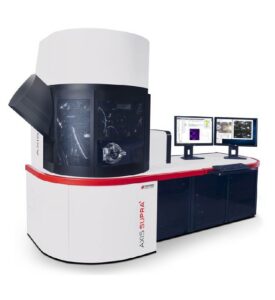
There are also other modes:
The business environments and needs involved in analysis work change on a continual basis. The next-generation GCMS-QP2050 gas chromatograph mass spectrometer, with its accumulation of impressive Shimadzu technology, will lead the way forward. New value is provided by hardware boasting astounding reliability and stability, and easy-to-operate software equipped with superior automated technology.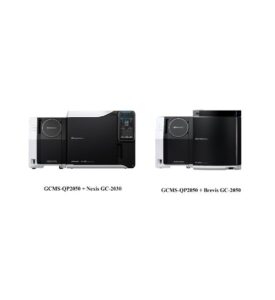
Advantages of the New GCMS-QP2050
1. Detector | The new model is equipped with both the latest noise suppression technology and high amplification performance, and can accurately assess even trace ions
2. Quadrupole Rods | By significantly improving mass separation performance and ion transmittance, the system achieves the industry's highest level of scan speed (30,000 u/sec)
3. Interface | The new interface has been optimized to ensure a uniform temperature distribution
4. DuraEase Ion Source | DuraEase technology enables this next-generation ion source to achieve the industry's highest level of sensitivity, durability, and ease of maintenance.
5. Long-life Filament | Highly durable new filament has an operating life about five times longer than usual
6. Equipment Size | 20% slimmer than the GCMS-QP2010SE
High-performance, versatile flash purification system designed for broad requirements in drug discovery and research laboratories.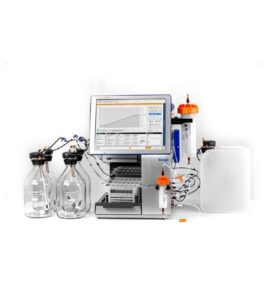
Benefits : Biotage® Selekt is a high-performance flash purification system designed to handle a diverse range of purification applications in drug discovery and research laboratories. With a maximum flow rate of 300 mL/min, pressure capability of 30 bar, and the ability to accommodate columns up to 1.85 kg, it offers exceptional versatility.
Simple by Design : With features like a column QR code reader, automatic rack recognition, and network integration, Biotage® Selekt ensures purification will never be the bottleneck.
Four Solvent Lines, Two Column Lines : Biotage® Selekt features four solvent lines, allowing simultaneous setup of two different solvent systems and two column lines for each solvent system. Biotage® Selekt can switch between applications with a simple touchscreen operation, ensuring unparalleled versatility.
Columns from 5 g to 1.85 kg : Biotage® Selekt can run Biotage® Sfär columns ranging from 5 to 340 g for typical laboratory reactions. By adding a safety valve, it extends its capability to accommodate columns up to 1.85 kg for larger scale reactions.

